Home · Catalogue · Children’s & Illustrated · S.I.5865

Description du Manége Moderne
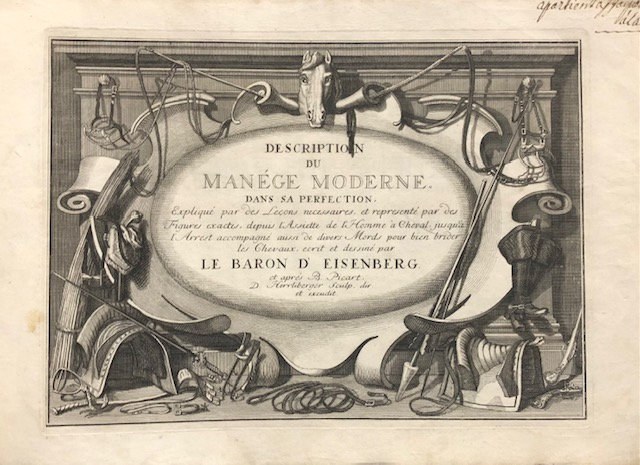
Dans sa Perfection, Expliqué par des leçons necessaires, et representé par des figures exactes, depuis l'assiette de l'homme à cheval, jusqu'à l'arrest accompagné aussi de divers mords pour bien brider les chevaux, ecrit et dessiné par le baron D'Eisenberg, et gravé par B. Picart. TRANSLATION: "Description of Modern Horsemanship. In its Perfection, Explained through necessary lessons, and depicted by accurate figures, from the rider's position on horseback to the halt, also accompanied by various bits for properly bridling horses, written and illustrated by Baron D'Eisenberg, and engraved by B. Picart."
Eisenberg, D., B Picart · Zurich
Guaranteed authentic and as described · 7-day returns · free shipping within the continental US · international shipping quoted on enquiry · ships in 1–3 business days · our terms. Available until paid for.
Rated 5.0 by buyers on Etsy and Google.
VisaMastercardDiscoverApple PayPayPalCheck / wire
Condition
- Author
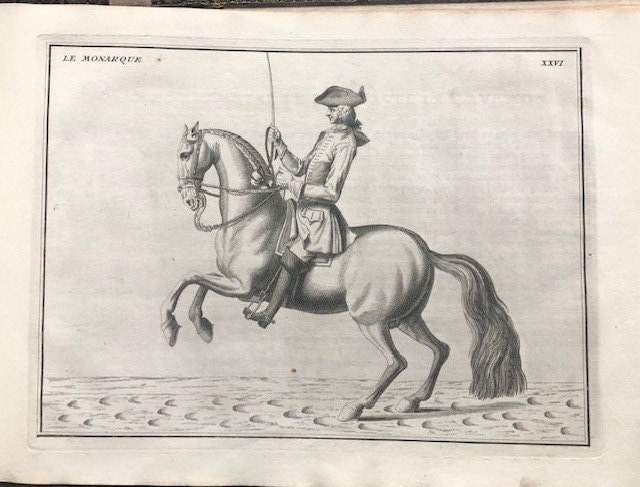
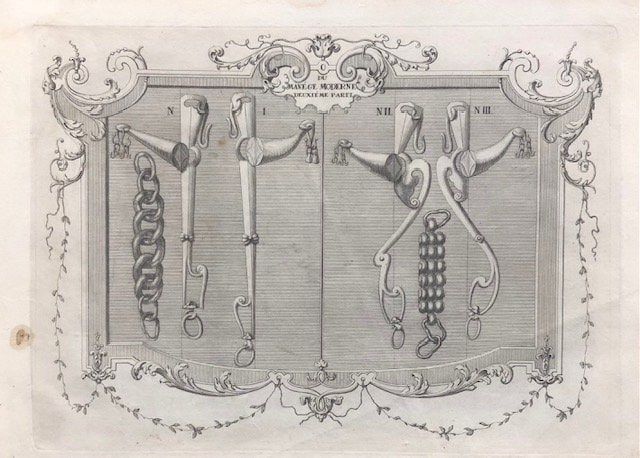
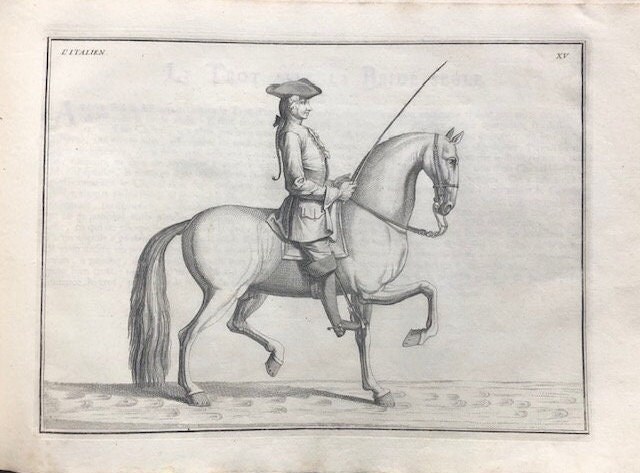
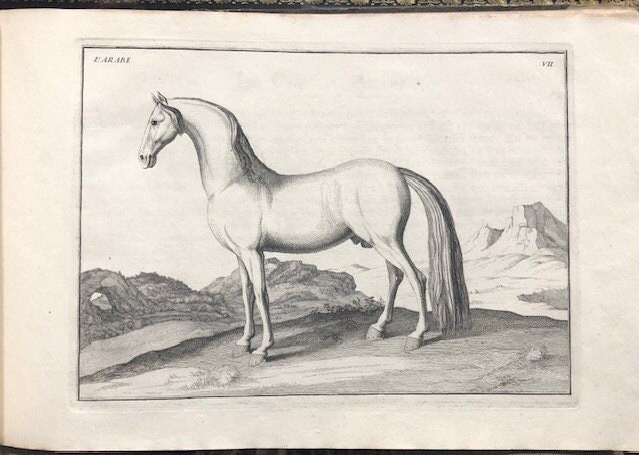
- Eisenberg, D., B Picart This work is rightly considered one of the most beautiful of the first half of the eighteenth century. The author, Baron D. Eisenberg, wrote the text and drew the plates which were engraved by B. Picart. The first seven represent the breeds of horses used at the time: the Spanish horse, the Barbe, the German horse, the Neapolitan, the English horse, the Turkish horse, and the Arabian horse of which this is the first representation in a work in French. The plate showing the Naples horse is important because documents representing this extinct breed are extremely rare; the only one to have given us a drawing worthy of interest being Duke William of Newcastle. This series of engravings is a real pleasure for the eyes of the amateur, who, thanks to the precision of the drypoint, finds particularly well transcribed the particularities of the model of each of the breeds studied. The plates numbered VIII to LV represent squires on horseback and the name of each horse is mentioned in the upper left corner of the engravings. The last four plates represent seven figures of bits. Concerning the equestrian doctrine itself, Eisenberg places himself between the Duke of Newcastle to whom he pays homage in his introduction and from whom he draws inspiration in the use of the cavesson, and the teaching of La Guérinière for some of the figures he uses and which without naming it.
- Date
- 1743
- Place
- Zurich
- Language
- French
- Binding
- Oblong Folio.(15.5" x 10.25") 1743.
- Format
- folio · 15.5 × 10.25 in
- Condition
- Very Good
- Category
- Children’s & Illustrated
- Record
- S.I.5865
Description du manége moderne. Dans sa perfection, expliqué par des leçons necessaires, et representé par des figures exactes, depuis l'assiette de l'homme à cheval, jusqu'à l'arrest accompagné aussi de divers mords pour bien brider les chevaux, ecrit et dessiné par le baron D'Eisenberg, et gravé par B. Picart. Translated from French: (The Art of Riding a Horse) Description of the modern carousel. In its perfection, explained by necessary lessons, and represented by exact figures, from the seat of the man on horseback, to the arrest also accompanied by various bits to properly bridle the horses, written and drawn by the Baron D'Eisenberg, and engraved by B. Picart.
Author: Eisenberg, Le Baron d'
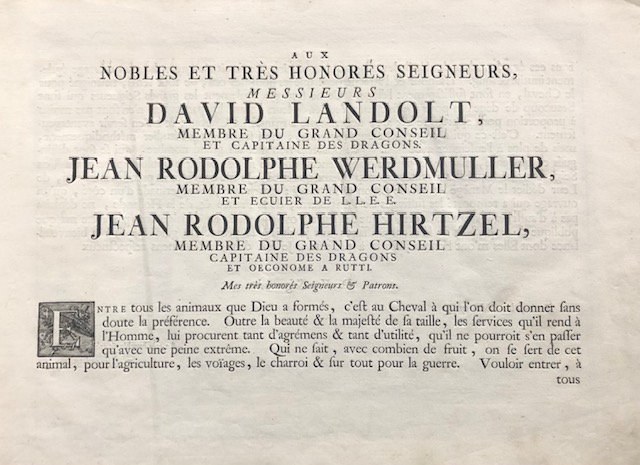
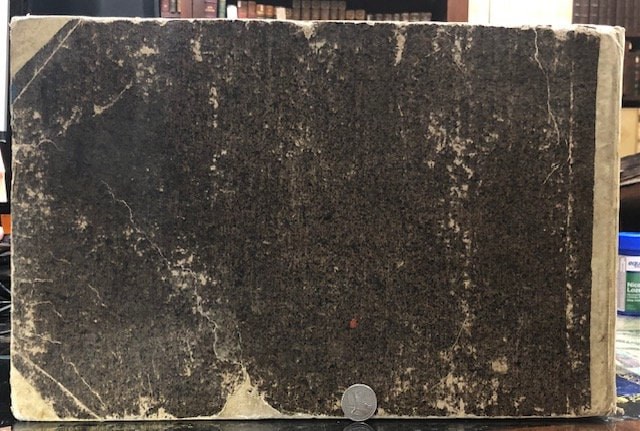
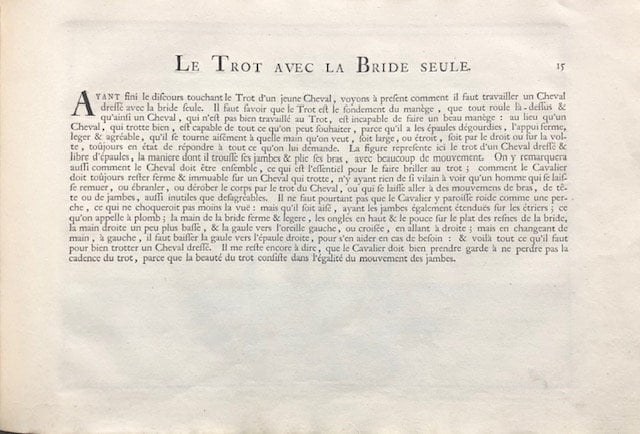
Oblong Folio.(15.5" x 10.25") 1743. Eisenberg, Le Baron d'. Zurich? With engraved title, dedication leaf, and 57 plates with their accompanying leaves of text (55 of horsemanship, and 2 plates of bits.) Period 1/2 vellum over marbled boards. A very rare edition apparently printed in Zurich (dedication is dated Zurich, 1743.) All 57 plates are present in this example; according to the RBH the last complete copy to appear at auction was in 1982 (Sotheby's.) Since then, only a few have appeared auction and none have been complete. Binding rubbed, vellum a bit soiled. Contents are mostly quite clean; approximately a dozen plates with light and faded water-stains to margin, one text leaf with some light brown splatter (see pic), else only minor blemishes in places. Overall a very nice example. Translated from French: (The Art of Riding a Horse) Description of Modern Manège: Written by Baron d'Eisenberg and illustrated with engravings by B. Picart
From the Web: This work is rightly considered one of the most beautiful of the first half of the eighteenth century. The author, Baron D. Eisenberg, wrote the text and drew the plates which were engraved by B. Picart. The first seven represent the breeds of horses used at the time: the Spanish horse, the Barbe, the German horse, the Neapolitan, the English horse, the Turkish horse, and the Arabian horse of which this is the first representation in a work in French. The plate showing the Naples horse is important because documents representing this extinct breed are extremely rare; the only one to have given us a drawing worthy of interest being Duke William of Newcastle. This series of engravings is a real pleasure for the eyes of the amateur, who, thanks to the precision of the drypoint, finds particularly well transcribed the particularities of the model of each of the breeds studied. The plates numbered VIII to LV represent squires on horseback and the name of each horse is mentioned in the upper left corner of the engravings. The last two plates represent eight figures of bits. Concerning the equestrian doctrine itself, Eisenberg places himself between the Duke of Newcastle to whom he pays homage in his introduction and from whom he draws inspiration in the use of the cavesson, and the teaching of La Guérinière for some of the figures he uses and which without naming it.
Notes
Eisenberg, D., B Picart This work is rightly considered one of the most beautiful of the first half of the eighteenth century. The author, Baron D. Eisenberg, wrote the text and drew the plates which were engraved by B. Picart. The first seven represent the breeds of horses used at the time: the Spanish horse, the Barbe, the German horse, the Neapolitan, the English horse, the Turkish horse, and the Arabian horse of which this is the first representation in a work in French. The plate showing the Naples horse is important because documents representing this extinct breed are extremely rare; the only one to have given us a drawing worthy of interest being Duke William of Newcastle. This series of engravings is a real pleasure for the eyes of the amateur, who, thanks to the precision of the drypoint, finds particularly well transcribed the particularities of the model of each of the breeds studied. The plates numbered VIII to LV represent squires on horseback and the name of each horse is mentioned in the upper left corner of the engravings. The last four plates represent seven figures of bits. Concerning the equestrian doctrine itself, Eisenberg places himself between the Duke of Newcastle to whom he pays homage in his introduction and from whom he draws inspiration in the use of the cavesson, and the teaching of La Guérinière for some of the figures he uses and which without naming it.
Enquire about this book
More in Children’s & Illustrated
 Costume of Turkey / La TurquieAlexander, William / Dalvimart, Octavien · 1804$4,500
 Old Italian MastersCole, Timothy. · 1892$4,500
 Views of The Lakes, &c. in Cumberland and WestmorlandFarington, Joseph · 1789$4,500
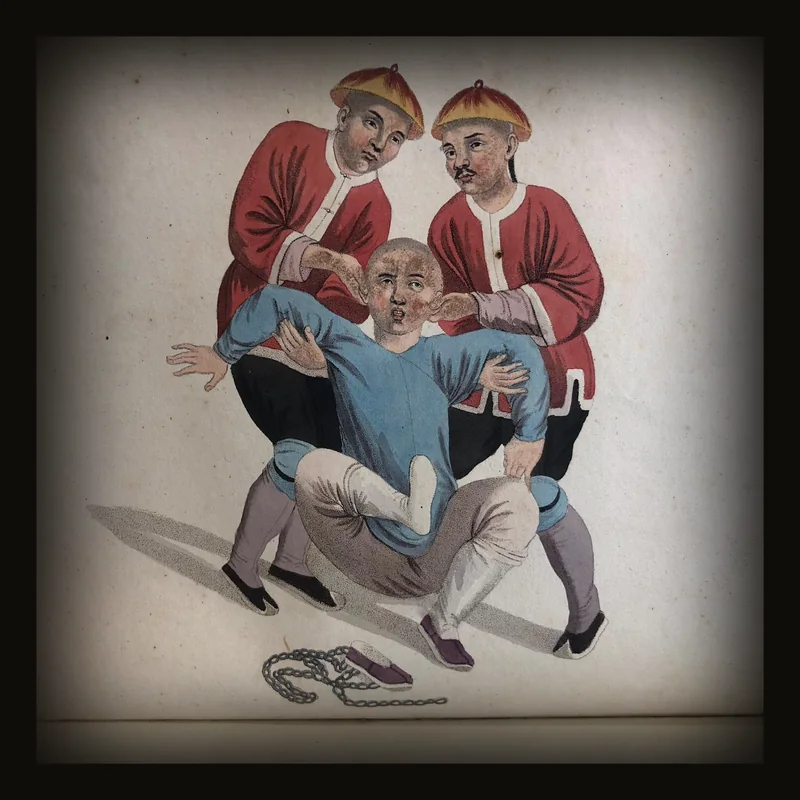 Die Strafen der Chinesen : auf XXII ausgemalten Kupfern dargestellt und nach dem Englischen mit Rücksicht auf die…Hempel, Friederick · 1804$4,000