Home · Catalogue · Literature & Poetry · S.I.3758
The Works of Ralph Waldo Emerson
Emerson, Ralph Waldo · Boston
- Author
- Emerson, Ralph Waldo
- Date
- 1883-1888
- Place
- Boston
- Publisher
- Houghton, Mifflin and Company
- Language
- English
- Binding
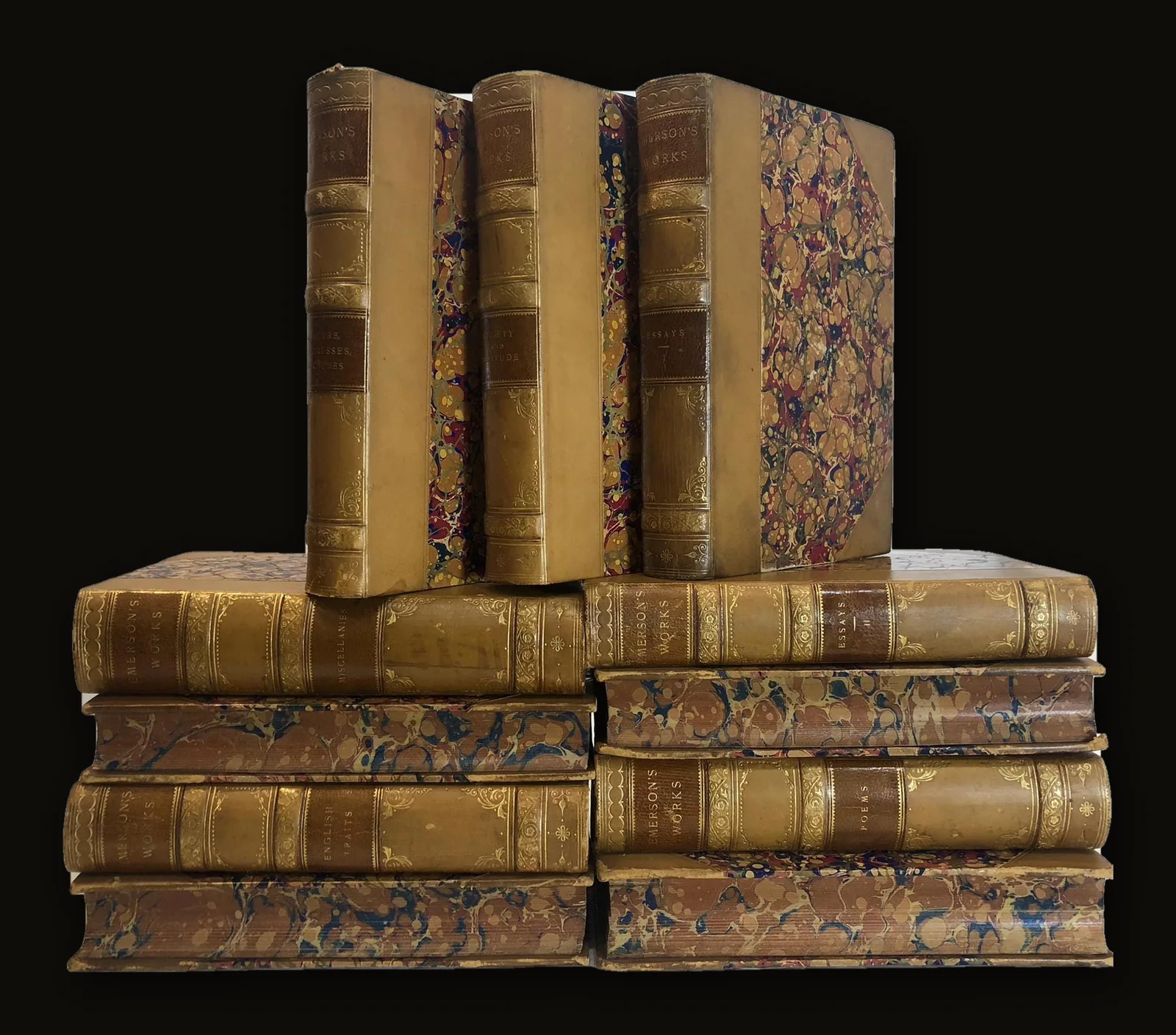
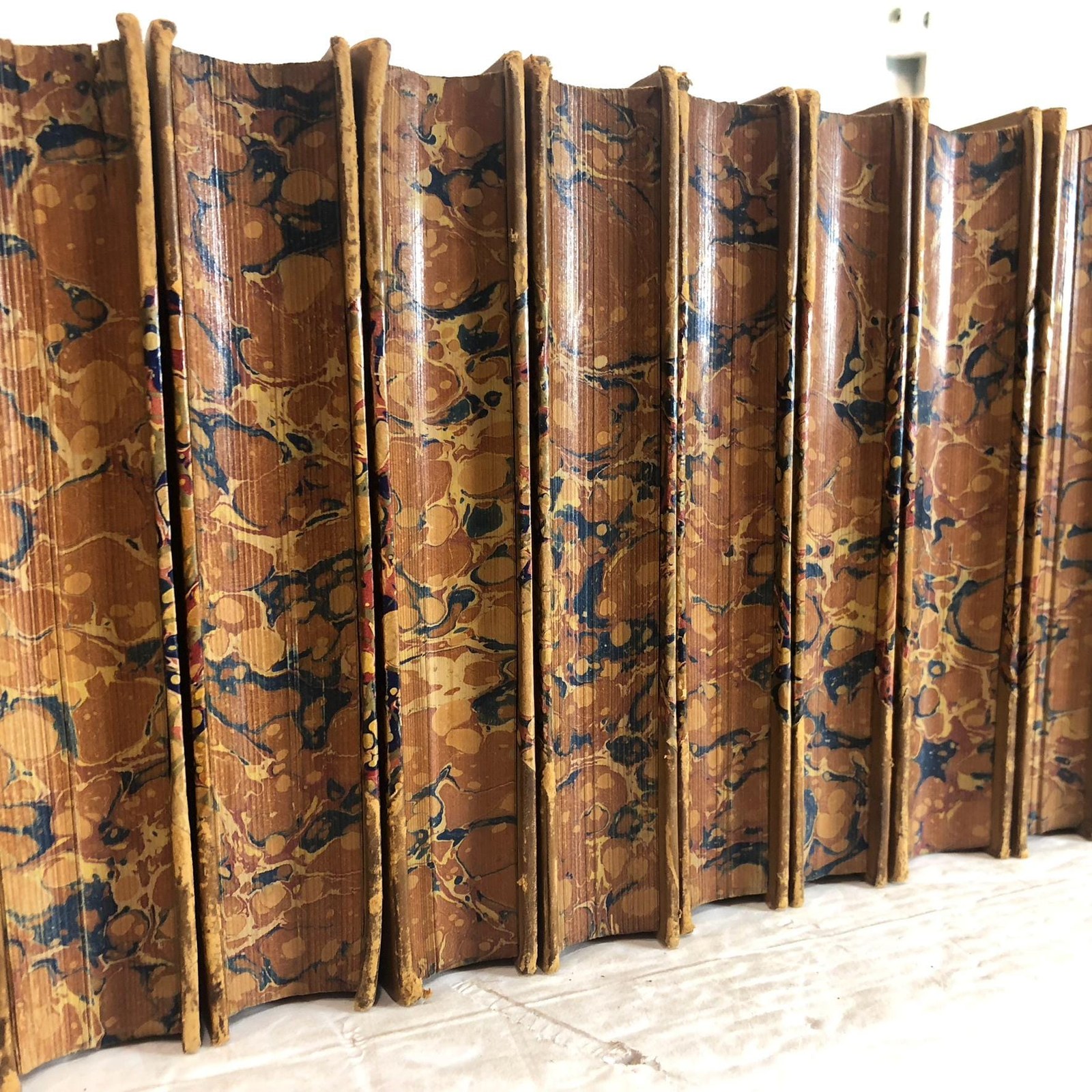
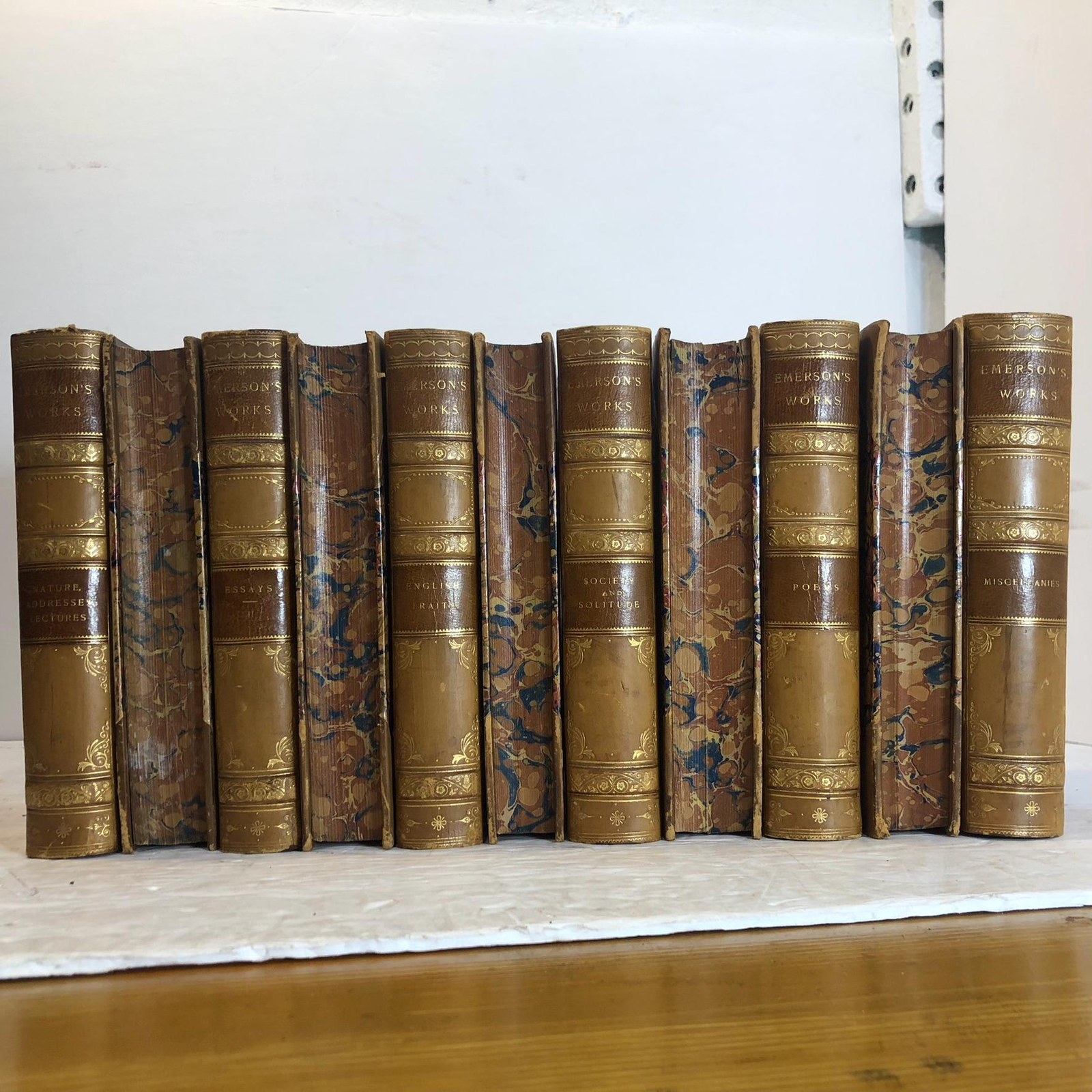
- Large 12mo. 3/4 tan calf, gilt accented spine with 3 wide raised gilt enhanced compartments, 2 brown labels,. Beautiful complimenting matching marbled boards, page edges, and endpapers
- Category
- Literature & Poetry
- Record
- S.I.3758
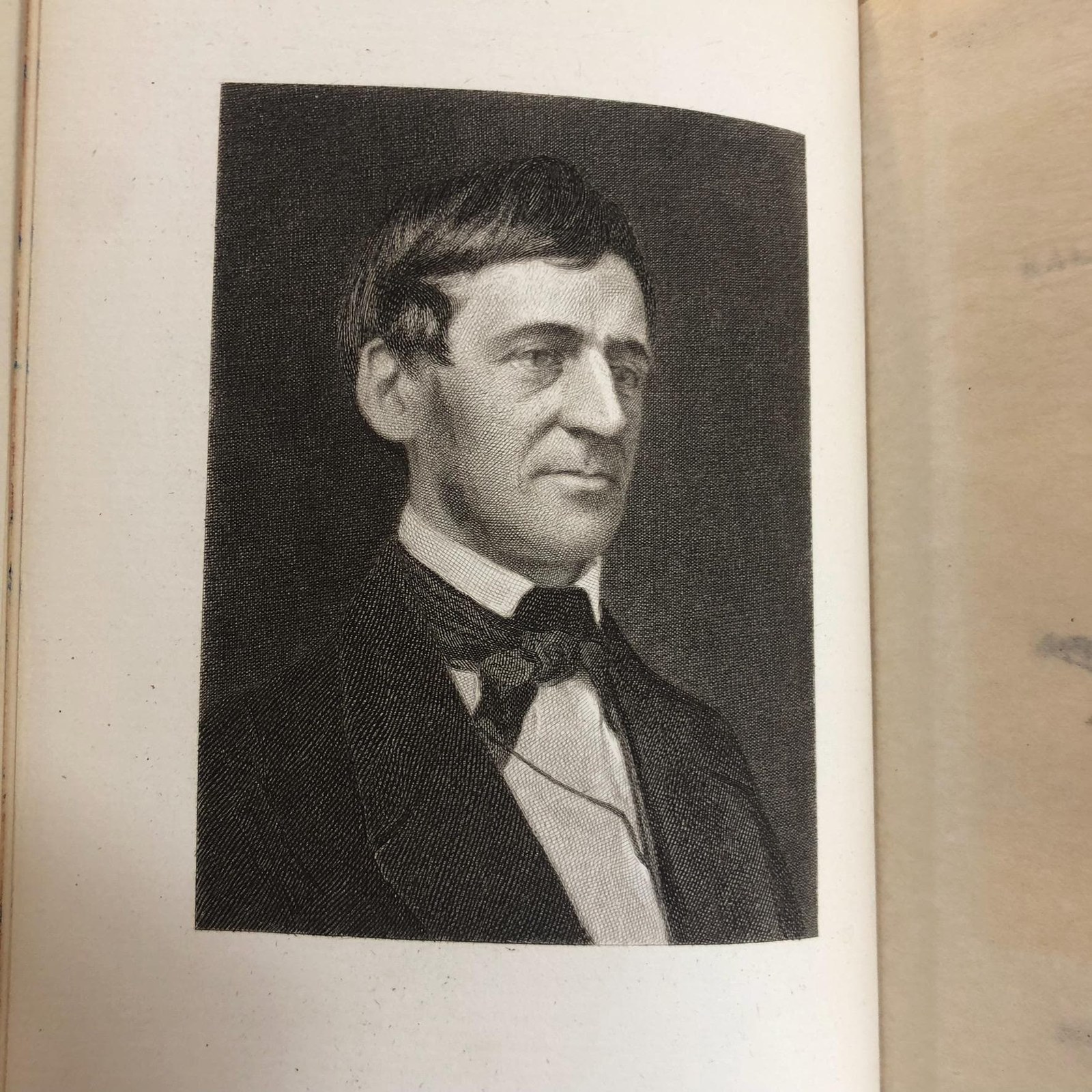
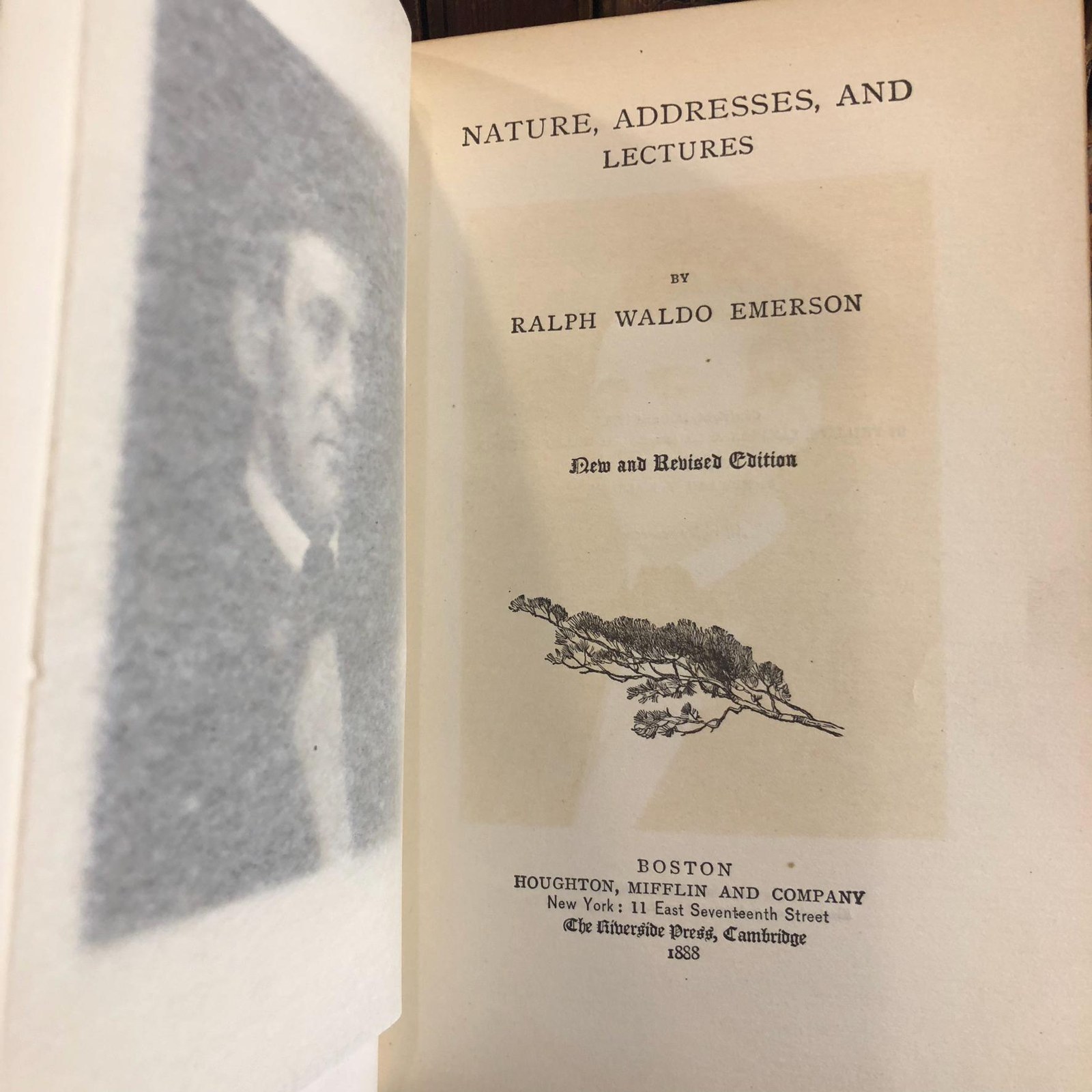
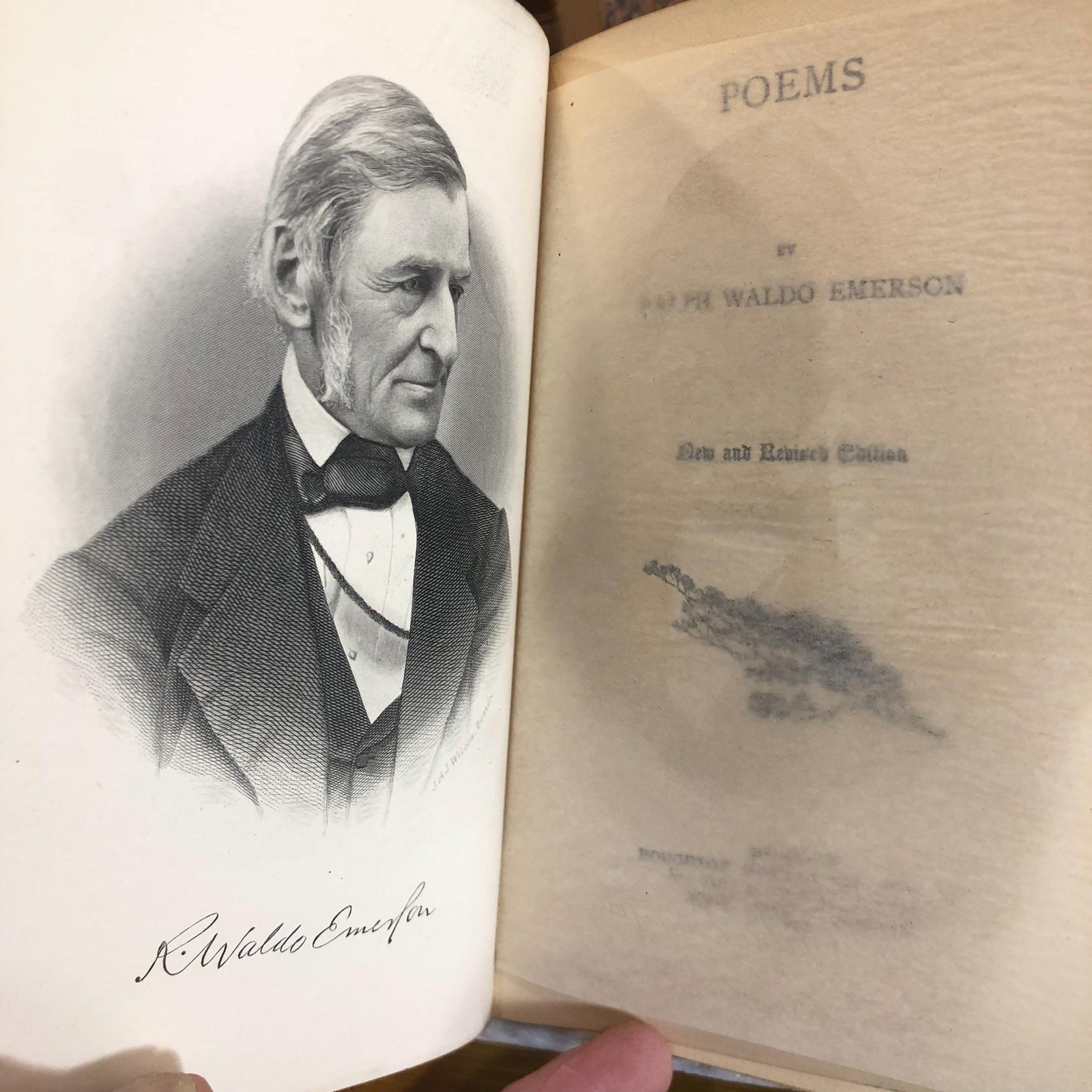
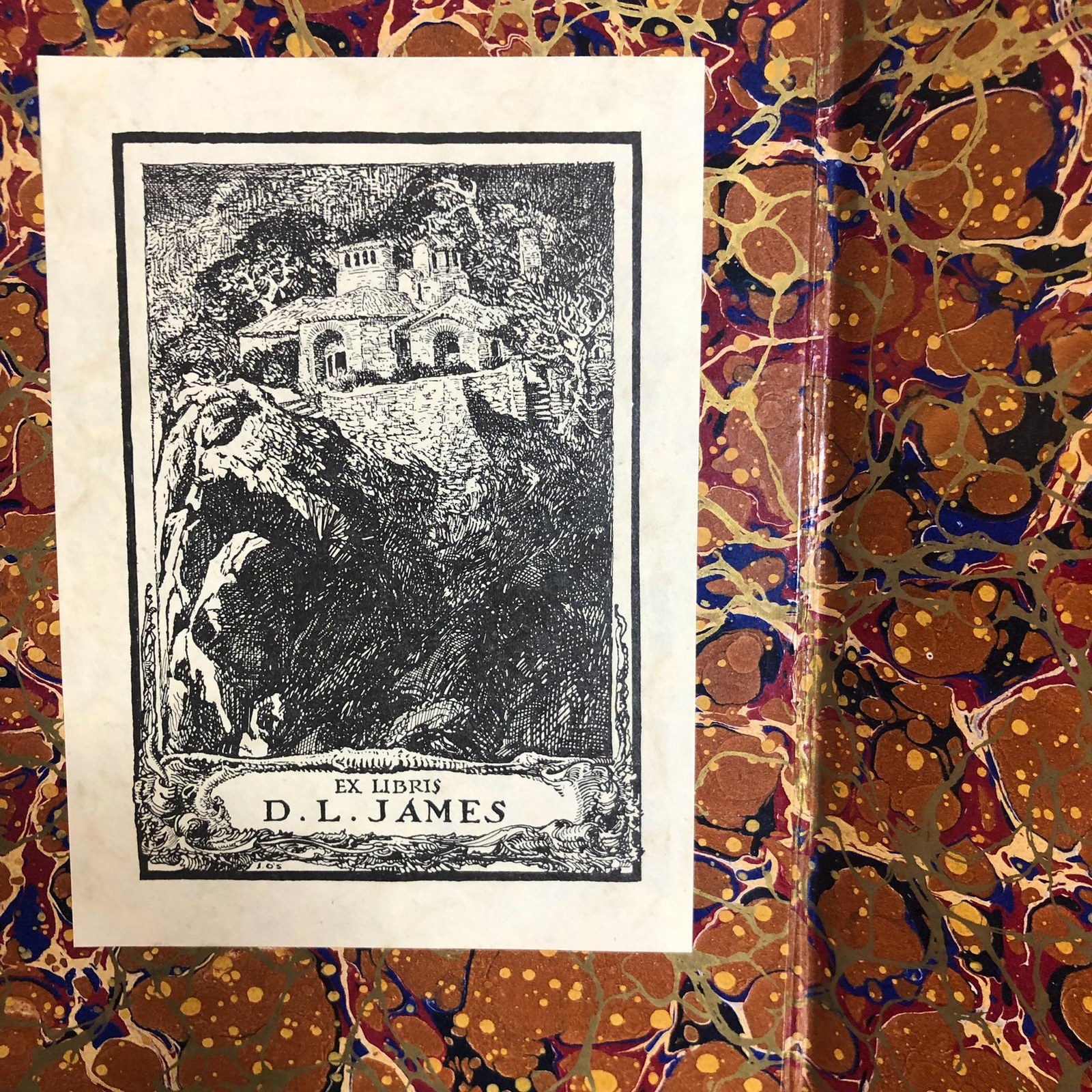
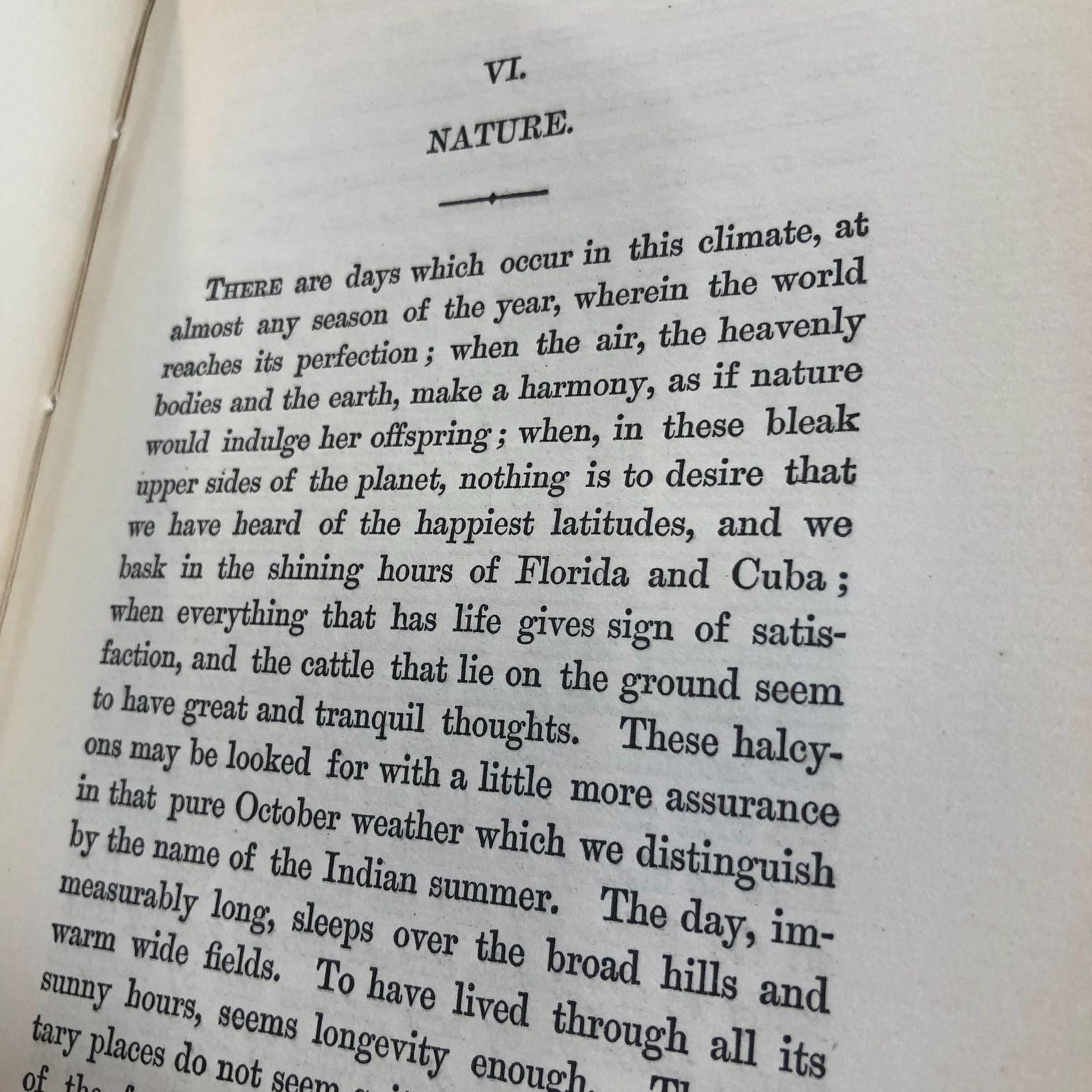
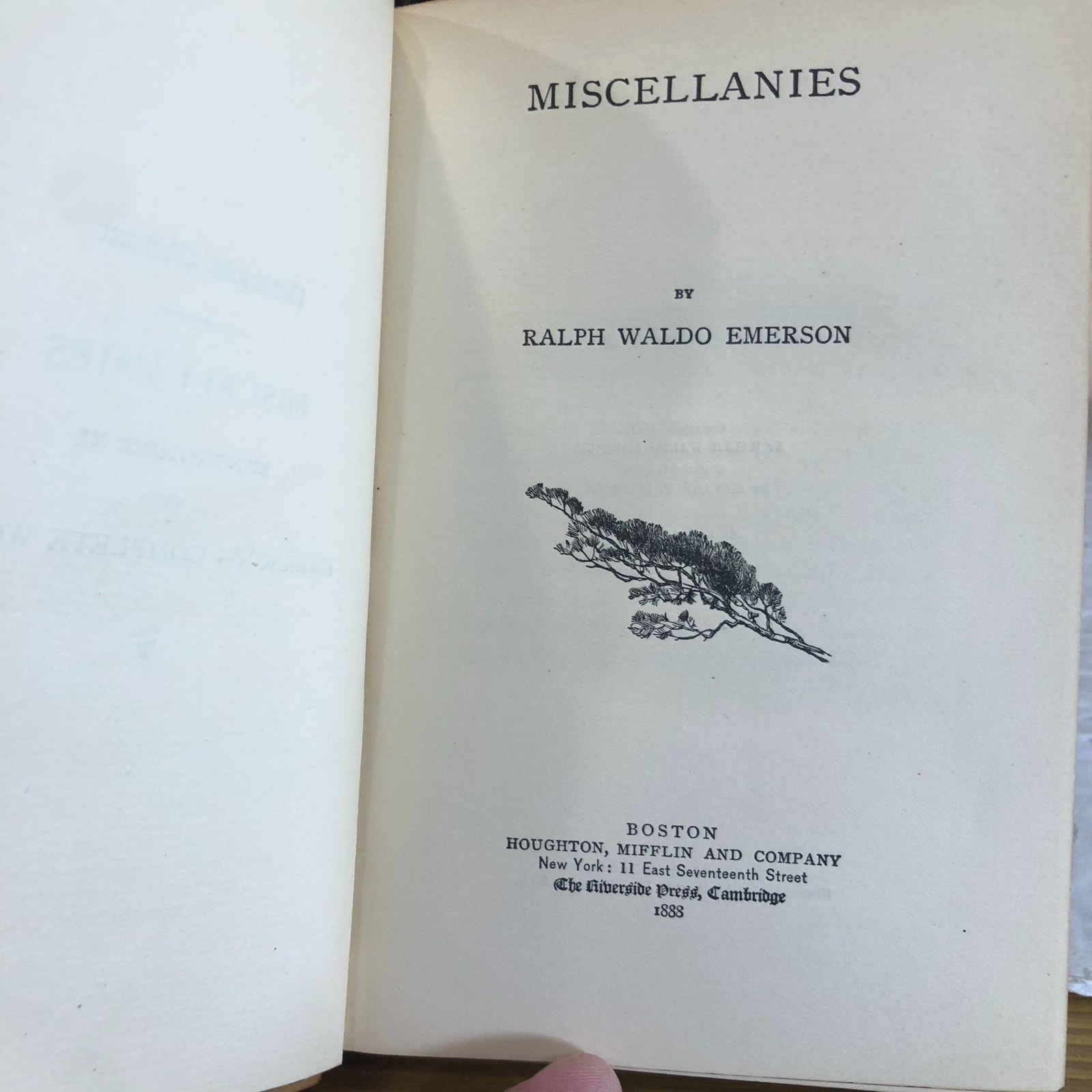
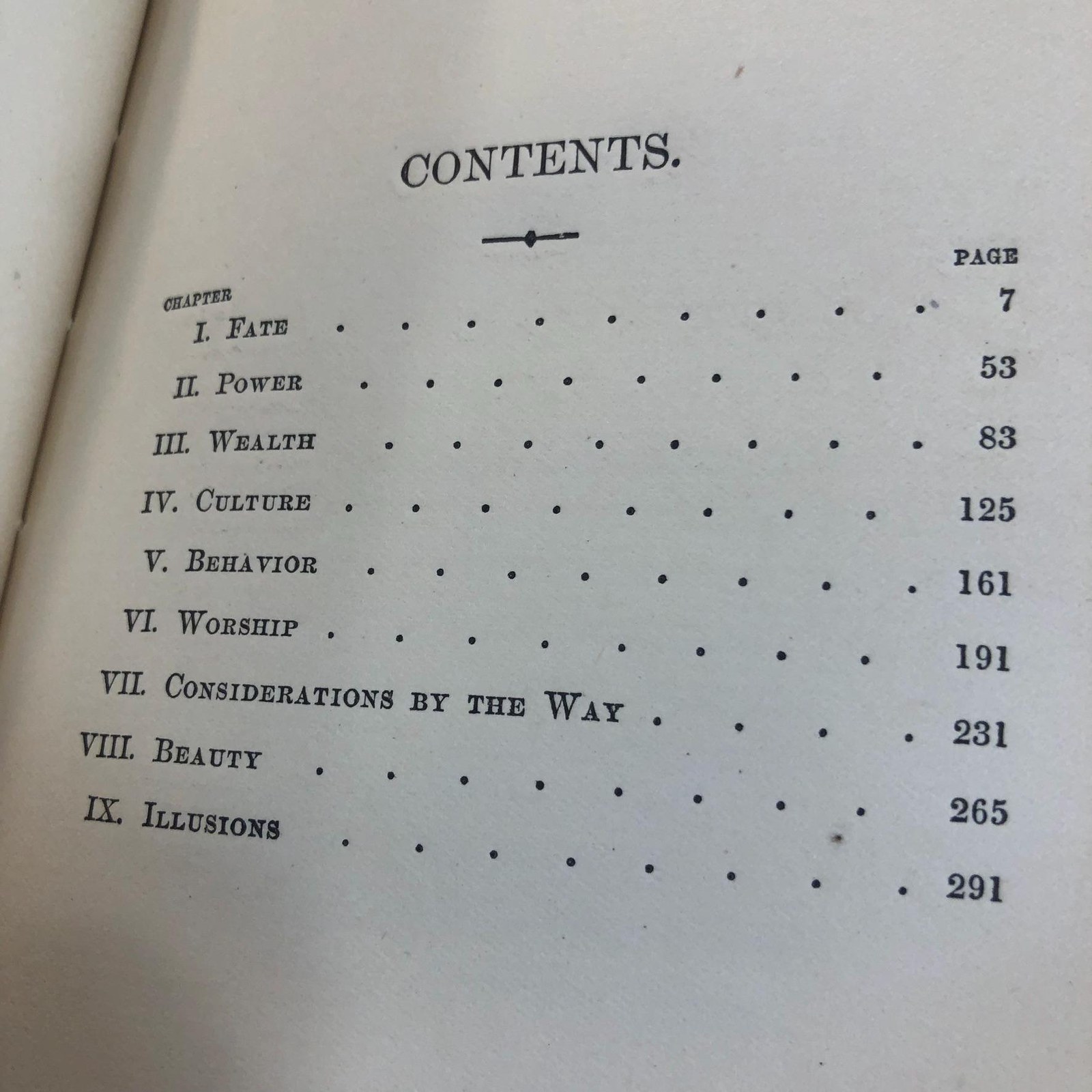
The Works of Ralph Waldo Emerson. Large 12mo.(4.75" x 7.125") Eleven Volumes complete. 1883-1888, Boston: Houghton, Mifflin and Company. Half tan polished calf with corners over marbled boards. Spine with three gilt decorated raised bands, gilt lettering to brown leather labels in first and third compartment, fancy gilt rule framing other compartments. All edges marbled, marbled endpapers. Minor edgwear, corners lightly bumped and rubbed, with a couple rubbed through to board (see pic). Heads of some volumes rubbed with loss of color, a couple lightly chipped (see pic). large bookplate of "D.L. James" to front pastedowns. Ralph Waldo Emerson (May 25, 1803 – April 27, 1882), who went by his middle name Waldo, was an American essayist, lecturer, philosopher, minister, abolitionist, and poet who led the Transcendentalist movement of the mid-19th century. He was seen as a champion of individualism and critical thinking, as well as a prescient critic of the countervailing pressures of society and conformity. Friedrich Nietzsche thought he was "the most gifted of the Americans," and Walt Whitman called Emerson his "master". Emerson gradually moved away from the religious and social beliefs of his contemporaries, formulating and expressing the philosophy of Transcendentalism in his 1836 essay, Nature. His speech "The American Scholar," given in 1837, was called America's "intellectual Declaration of Independence" by Oliver Wendell Holmes Sr. Emerson wrote most of his important essays as lectures and then revised them for print. His first two collections of essays, Essays: First Series (1841) and Essays: Second Series (1844), represent the core of his thinking. They include the well-known essays "Self-Reliance", "The Over-Soul," "Circles," "The Poet," and "Experience." Together with "Nature," these essays made the mid-1830s to the mid-1840s Emerson's most fertile period. Emerson wrote on a number of subjects, never espousing fixed philosophical tenets. He instead developed ideas such as individuality, freedom, the ability for mankind to achieve almost anything, and the relationship between the soul and the surrounding world. Emerson's "nature" was more philosophical than naturalistic: "Philosophically considered, the universe is composed of Nature and the Soul." Emerson is one of several figures who "took a more pantheist or pandeist approach, by rejecting views of God as separate from the world." He remains among the linchpins of the American romantic movement, and his work has greatly influenced the thinkers, writers, and poets that followed him. "In all my lectures," he wrote, "I have taught one doctrine, namely, the infinitude of the private man." Emerson is also well-known as a mentor and friend of Henry David Thoreau, a fellow Transcendentalist. A beautiful set of books, with great shelf-appeal, filled with great American literature.
Condition
Condition report available on request — ask and we will send a written report with additional photographs.
Guaranteed authentic and as described · 7-day returns · free US shipping — our terms. Subject to prior sale.