Home · Catalogue · Fore-Edge Paintings · S.I.5914
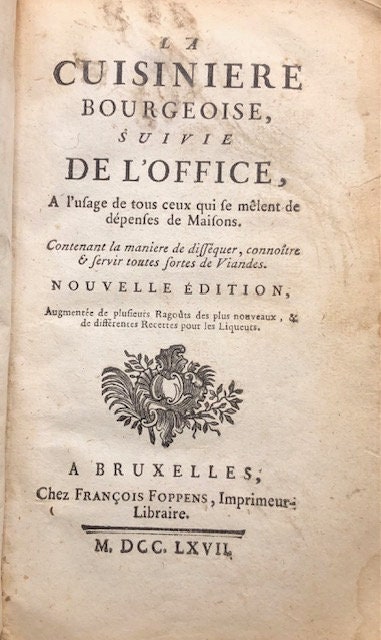
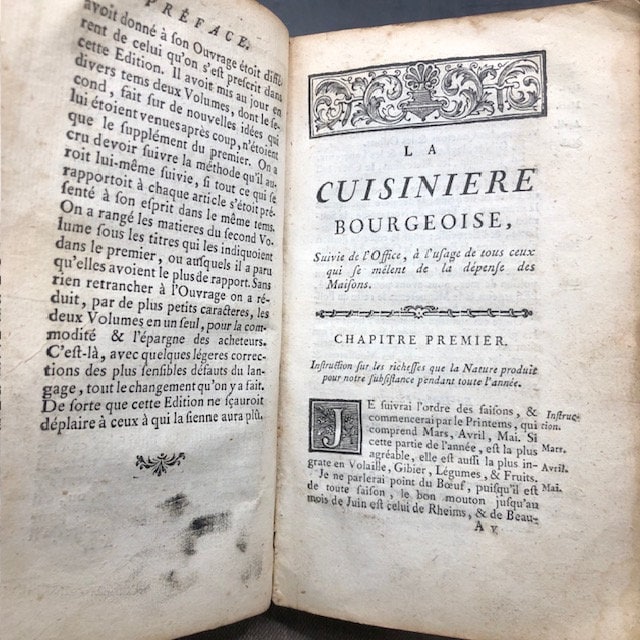
La Bourgeoise, Suivie De L'Office, A l'ufage de tous ceux qui se melent de depensas de Maisons. Contenant la manier de dissequer, connoure & servir tontes sortes de Viandes. Nouvelle Edition, Augmenteede plusiers Ragouts des plus nouveaux, & de differentes Recettes pour les Liqueurs. Translated from French: La Bourgeoise, followed by the Office, for the benefit of all those who are involved in house expenses. Containing the way of dissecting, knowing & serving all kinds of meats. New Edition, Augmented with several of the newest Stews, & different Recipes for Liqueurs.
Menon, Louis Francois Henri de · A Bruxelles
- Author
- Menon, Louis Francois Henri de
- Date
- 1767
- Place
- A Bruxelles
- Publisher
- Chez Francois Foppens
- Language
- English
- Binding
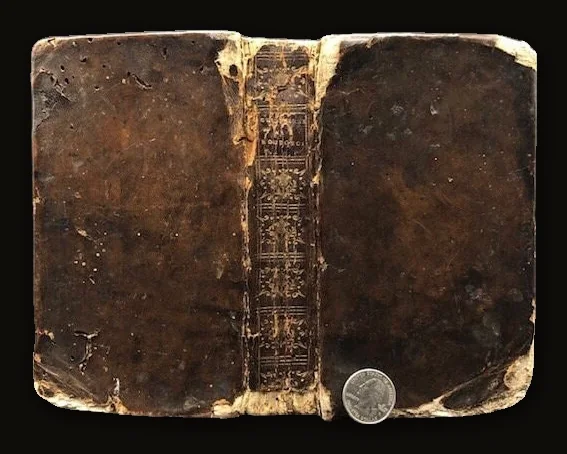
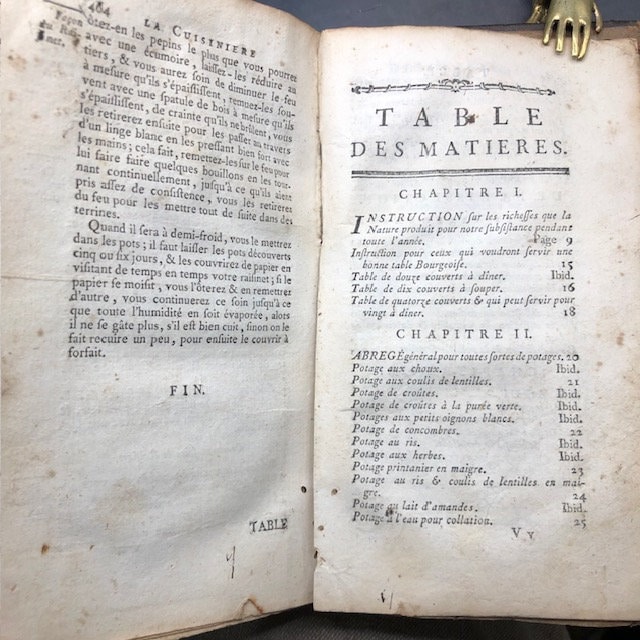
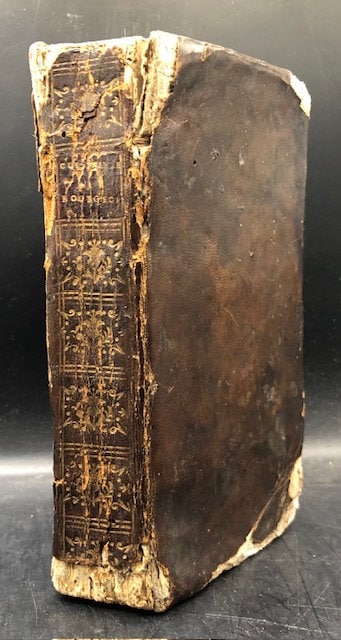
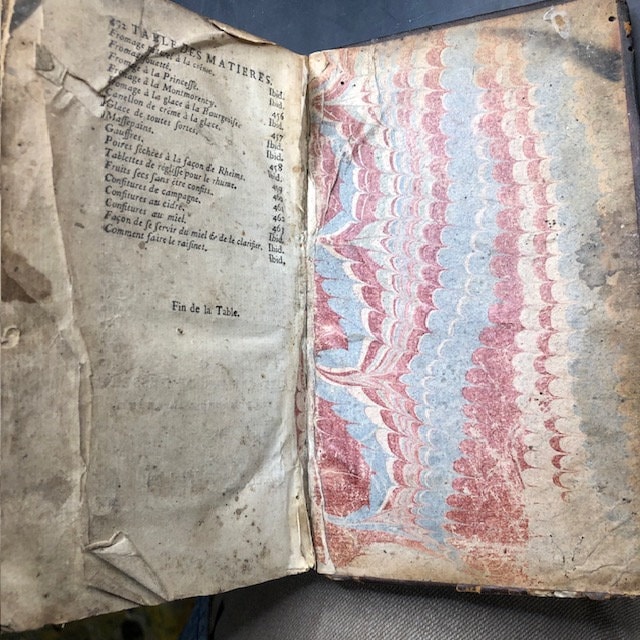
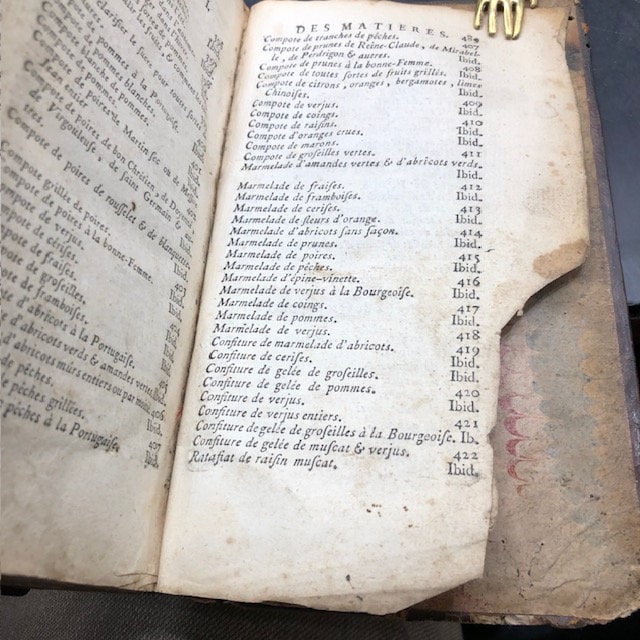
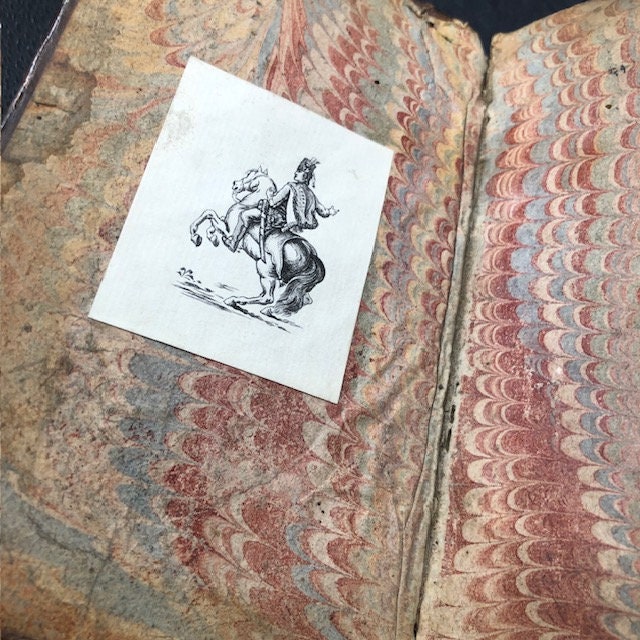
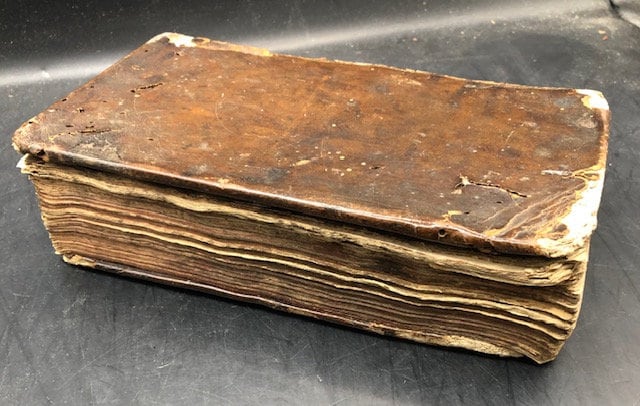
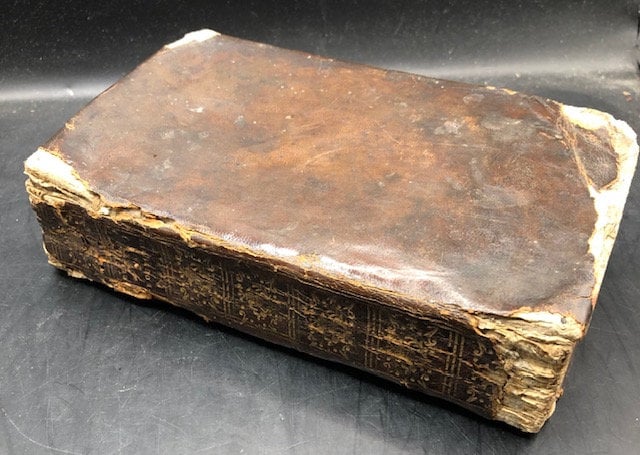
- 12mo.(4" x 6.675") Full brown polished calf. Spine with six gilt rule bands creating compartments, gilt title to second compartment, gilt floral frames and centered gilt floral devices to all others. Marbled endpapers, all edges reddened. Heavy edgewear with loss to edges of both covers (see pic). Head and foot of spine chipped with loss, greater to foot (see pic).Gutters starting. Corners bumped and rubbed, with loss. Last two leaves with loss to fore-edge, not affecting text. Lacking rear free flyleaves. Fore-edge soiled with minor dampstains, not affecting text. Text evenly toned with spots or stains throughout in places. Equestrian bookplate to front pastedown. 28 pg index at rear.
- Format
- Menon was one of the most prolific French cookbook writers of the 18th Century and has been referred to by his single surname until very recently. Virtually nothing is known about his life or his dates of birth and death. In mid-18th century France, a minor upheaval occurred in the way cookery in the home was handled. Two crucial elements contributed to this: First, female cooks were beginning to be employed in the household kitchens of the middle class and second, the expansion of meat cookery by such cooks was embraced. Is it possible that the central focus of one of the most widely reprinted cookbooks of the latter half of the 18th century, Menon's La Cuisiniere Bourgeoise (Menon 1746 (a)), a book written for the female cook, has been totally overlooked by food writers as one of the most important stimuli empowering the female chef to engage in meat cookery? This article addresses this question and argues that this publication might have influenced the selection and cooking of meat dishes by female cooks employed in French households of the time. Menon was one of the most prolific French cookbook writers of the 18th Century and has been referred to by his single surname until very recently. Virtually nothing is known about his life or his dates of birth and death. His name is not shown on the title pages of his books, all of which were anonymously published. His full name was only recently revealed in his own copy of a La Cuisiniere Bourgeoise dated 1752, currently in the Chateau de Villiers library, in which he had signed his name. It is Menon's second book of 1746, La Cuisinier Bourgeoise, (The [Female] Bourgeoise Cook), that is the subject of this article. His innovation of addressing a cookbook to the female cook of middle-class families, achieved for this publication a unique place in the history of gastronomy. Braudel points to Menon's La Cuisiniere Bourgeoise as being “a valuable book which, rightly or wrongly, [has] run through more editions than Pascal's Provinciales” (Braudel, 1979). The enduring influence that Menon had on the social engagement over food for more than a half century, lay, in large part, in his unique focus on the solitary female cook. Talking about cuisine as part of the daily banter was characteristic of the French, who not only enjoyed the culinary process, but were also knowledgeable about the texts which provided directions to aspiring cooks. It must be pointed out however, that for fully half of the French population, the French language was not the lingua franca well into the 18th century, so it must be assumed that the more worldly, urbanized sector of the bourgeoisie was the most likely beneficiary of the writings of Menon.
- Category
- Fore-Edge Paintings
- Record
- S.I.5914
La Bourgeoise, Suivie De L'Office, A l'ufage de tous ceux qui se melent de depensas de Maisons. Contenant la manier de dissequer, connoure & servir tontes sortes de Viandes. Nouvelle Edition, Augmenteede plusiers Ragouts des plus nouveaux, & de differentes Recettes pour les Liqueurs. Translated from French: La Bourgeoise, followed by the Office, for the benefit of all those who are involved in house expenses. Containing the way of dissecting, knowing & serving all kinds of meats. New Edition, Augmented with several of the newest Stews, & different Recipes for Liqueurs.
Author: Menon, Louis Francois Henri de
12mo.(4" x 6.675") 1767. Menon, Louis Francois Henri de. A Bruxelles: Chez Francois Foppens Full brown polished calf. Spine with six gilt rule bands creating compartments, gilt title to second compartment, gilt floral frames and centered gilt floral devices to all others. Marbled endpapers, all edges reddened. Heavy edgewear with loss to edges of both covers (see pic). Head and foot of spine chipped with loss, greater to foot (see pic).Gutters starting. Corners bumped and rubbed, with loss. Last two leaves with loss to fore-edge, not affecting te.xt. Lacking rear free flyleaves. Fore-edge soiled with minor dampstains, not affecting text. Text evenly toned with spots or stains throughout in places. Equestrian bookplate to front pastedown. 28 pg index at rear.
From the Web: Menon was one of the most prolific French cookbook writers of the 18th Century and has been referred to by his single surname until very recently. Virtually nothing is known about his life or his dates of birth and death. In mid-18th century France, a minor upheaval occurred in the way cookery in the home was handled. Two crucial elements contributed to this: First, female cooks were beginning to be employed in the household kitchens of the middle class and second, the expansion of meat cookery by such cooks was embraced. Is it possible that the central focus of one of the most widely reprinted cookbooks of the latter half of the 18th century, Menon's La Cuisiniere Bourgeoise (Menon 1746 (a)), a book written for the female cook, has been totally overlooked by food writers as one of the most important stimuli empowering the female chef to engage in meat cookery? This article addresses this question and argues that this publication might have influenced the selection and cooking of meat dishes by female cooks employed in French households of the time. Menon was one of the most prolific French cookbook writers of the 18th Century and has been referred to by his single surname until very recently. Virtually nothing is known about his life or his dates of birth and death. His name is not shown on the title pages of his books, all of which were anonymously published. His full name was only recently revealed in his own copy of a La Cuisiniere Bourgeoise dated 1752, currently in the Chateau de Villiers library, in which he had signed his name. It is Menon's second book of 1746, La Cuisinier Bourgeoise, (The [Female] Bourgeoise Cook), that is the subject of this article. His innovation of addressing a cookbook to the female cook of middle-class families, achieved for this publication a unique place in the history of gastronomy. Braudel points to Menon's La Cuisiniere Bourgeoise as being “a valuable book which, rightly or wrongly, [has] run through more editions than Pascal's Provinciales” (Braudel, 1979). The enduring influence that Menon had on the social engagement over food for more than a half century, lay, in large part, in his unique focus on the solitary female cook. Talking about cuisine as part of the daily banter was characteristic of the French, who not only enjoyed the culinary process, but were also knowledgeable about the texts which provided directions to aspiring cooks. It must be pointed out however, that for fully half of the French population, the French language was not the lingua franca well into the 18th century, so it must be assumed that the more worldly, urbanized sector of the bourgeoisie was the most likely beneficiary of the writings of Menon.
We are currently putting all 5000+ titles online, but if there is a specific title you are looking for, please reach out to [email protected], we may just have it!
Free shipping via USPS for United State purchaser within the continental U.S., International shipping determined using USPS Priority Express, DHL, FedEx, or Parcel Monkey,
Sonny Ideker Bookseller is located within City Antiques in Historic Roswell, Georgia at 700 Holcomb Bridge Road, Roswell, GA. 30076. We would love to have you visit, or email us at [email protected] for specific wants or needs, thanks!
Find Us On: Facebook: https://www.facebook.com/p/Sonny-Ideker-Bookseller-Rare-Antiquarian-Leather-Vellum-Bound-Books-100068669041560/ YouTube: https://www.youtube.com/@SonnyIdekerBookseller/about Instagram: https://www.instagram.com/sonny_ideker_bookseller
Antique Books, Old Leather Book, Old Vellum Book, Decorative Binding, Antiquarian Book, Vintage decorative, Ancient Leather, Rare Books, 18th century Cookbook, Important cookbook, French Cuisine, French Cooking, Female Chefs, Chef Menon
Full polished brown leather, marbled endpapers, all edges reddened, Recipes Receipts, Female Chef Cook, Separation of Duties, 18th century cook book, Decorative Books, Decorative Leather, Beautiful Decorative Book
Condition
Good
Guaranteed authentic and as described · 7-day returns · free US shipping — our terms. Subject to prior sale.